Research reveals key access barriers & inequalities in Artificial Intelligence
Women entrepreneurs are keen to access and utilise AI for business, but access barriers and inequalities persist.

Our latest research report pulls findings from a 2024 survey of nearly 3,000 women entrepreneurs in low and middle income countries. It shows that women entrepreneurs are embracing Artificial Intelligence (AI) tools to improve their business operations and boost their business outcomes. However, women face gender-specific barriers in accessing AI tools. This holds them back from achieving their full potential in business and limits their economic contributions. Here, our Senior MEL Officer, Diksha Ramesh, shares key findings from our research on AI and gives insight on how and why companies should support women entrepreneurs to use AI.
“The rise of AI has transformed the way we do business globally. Business owners are increasingly leveraging AI tools to boost productivity and profitability through automation and innovation. By integrating AI into their workflows, business owners are streamlining idea generation, marketing content development, bookkeeping, research and analytics, customer service, and more.
Women entrepreneurs shared their experiences with AI in our 2024 survey:
38% of respondents had already used AI for business.
26% of respondents planned to start using AI for business in the near future.
Women entrepreneurs are rapidly adopting AI to boost their business outcomes, enabling them to compete on a level playing field. Evidence from Intuit QuickBooks’ 2025 Annual Report on the Small Business Index suggests that women-led small firms adopting AI are already seeing notable gains, with over half (53%) reporting productivity improvements. In addition to driving business efficiency, the use of AI also reshaped how they manage their daily lives. It helped them achieve work-life balance, freeing up valuable hours that they redirect towards family time and care work. In practice, the uptake of AI among women entrepreneurs has the potential to benefit them, their families, communities, and economies.
A key factor in my growth has been embracing digital tools and AI.
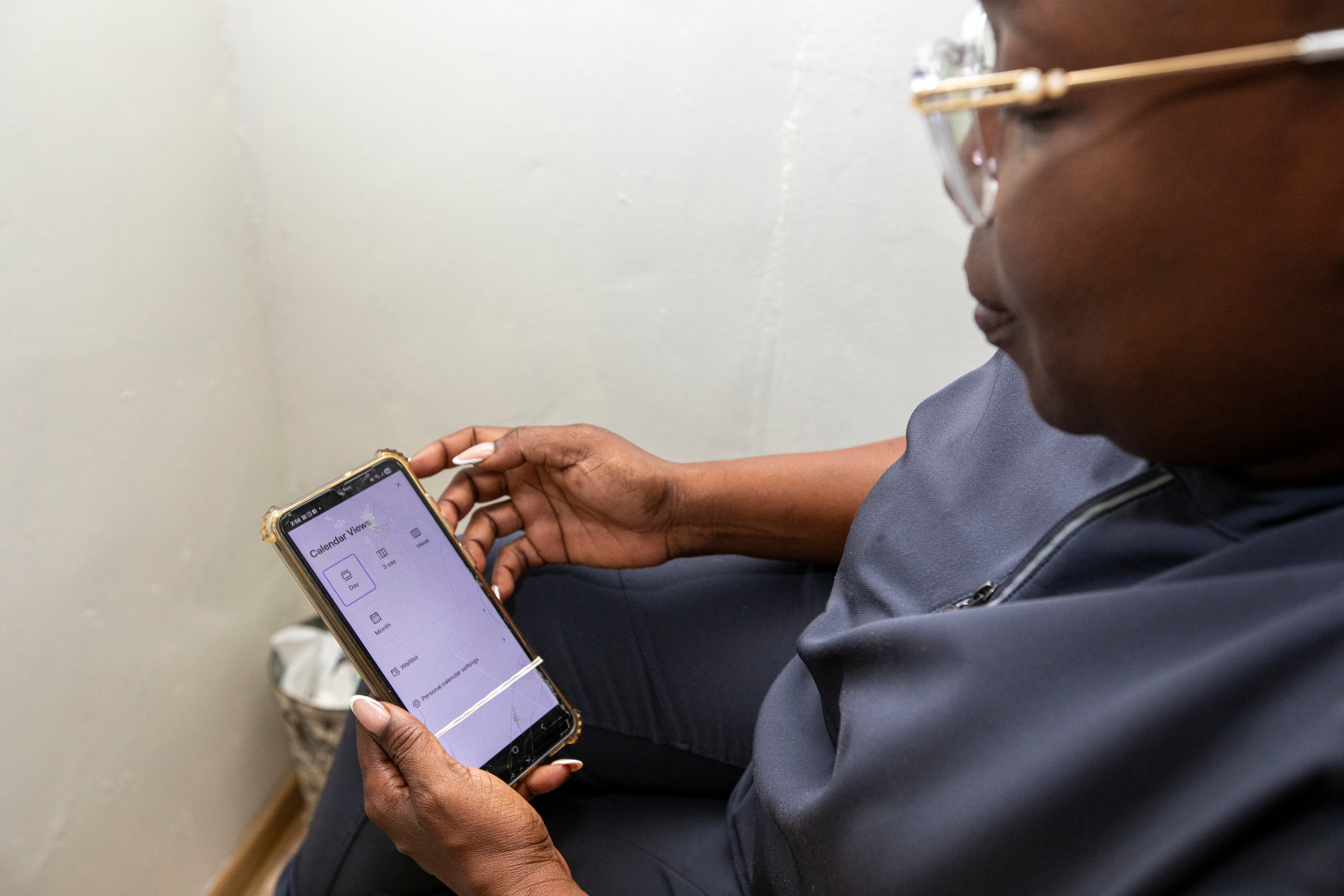
Gendered barriers & inequalities prevent women from using AI.
Despite the mountain of benefits that AI adoption can provide women business owners, many still lack access to AI tools and the skills required to use them. Access to knowledge and information about how to use AI is a key barrier. In our survey, 17% of women entrepreneurs did not know about AI and its uses and 7% reported not knowing anything about AI at all.
Lack of reliable internet access is also a determinant of AI uptake. Our research revealed that nearly half (45%) of the women we surveyed lack regular internet access. Those without regular internet access are 2.5 times less likely to be using AI and unlocking its many benefits.
Beyond accessibility barriers, women face additional, gender-specific challenges when using AI tools. AI applications are only as fair as the underlying datasets and algorithms on which they are trained. AI models imitate the gender data gaps, exacerbating biases and stereotypes present in the real world and even, perpetuating exclusion of different communities. For women entrepreneurs, the consequences are perceptible: biased AI systems may restrict their access to finance, prioritize male patterns of use and outcomes, or stereotype women consumers.
This barrier doesn’t just limit women’s business success, it also prevents financial institutions from enjoying the strong return-on-investment that women’s businesses provide. Consequently, tech companies lose out on women as a key consumer demographic. And ultimately, entire sectors and economies are stifled.
One challenge is that sometimes AI is a little bit westernised. I'm from the Caribbean, so I want to use it to generate ideas for the Caribbean, as opposed to Americanised Western ideas.

Training and research on AI is needed.
Women entrepreneurs we surveyed showed an appetite for AI training and skill development. In fact, 71% of all the women surveyed identified training on AI as a critical requirement.
While the Foundation does not currently offer AI-specific training programmes, all of our programmes aim to increase women’s digital literacy and confidence, which can support them in adopting AI tools and harnessing them for business growth. With support from partners, we are keen to explore how AI curriculum can be integrated into our programmes in the future.
In the meantime, we’ve worked with Intuit and the World Bank’s ‘Women, Business, and the Law’ project to conduct a new research survey, specifically focused on how women entrepreneurs are using AI, the challenges they encounter when using it, and what kind of support they need to overcome those challenges. Findings from this research will be published in a landmark report ahead of International Women’s Day 2026.

The way forward
Our report has several recommendations for how the private sector and technology companies can support women entrepreneurs to thrive in the age of AI. These include:
- Enhancing women’s access to smartphones, tablets, laptops, and internet connectivity to enable their full participation in the digital economy.
- Ensuring that AI technologies do not reinforce gender-based inequalities by addressing biases in their training data and decision-making processes.
- Meet the strong demand for AI training by investing in woman-centred digital literacy programmes.
Read the report for a full list of recommendations.
Read more news...
-

Investing in women entrepreneurs is the surest bet there is
By Kate Mulhearn, Chief Executive Officer, Cherie Blair Foundation for Women
Read more
-

2025 Impact Report
Our Impact Report highlights the year's key achievements and the stories of women behind them.
Read more
-
Three things I learnt from women entrepreneurs in Mexico
By Kate Mulhearn, Executive Director of the Cherie Blair Foundation for Women
Read more